Before you begin
- Dry-looking and safe-to-read are not always the same.
- Flood contamination and structural damage deserve specialist advice.
- Recovery results depend on what remains readable after safe handling.
Keep the disc out of the drive
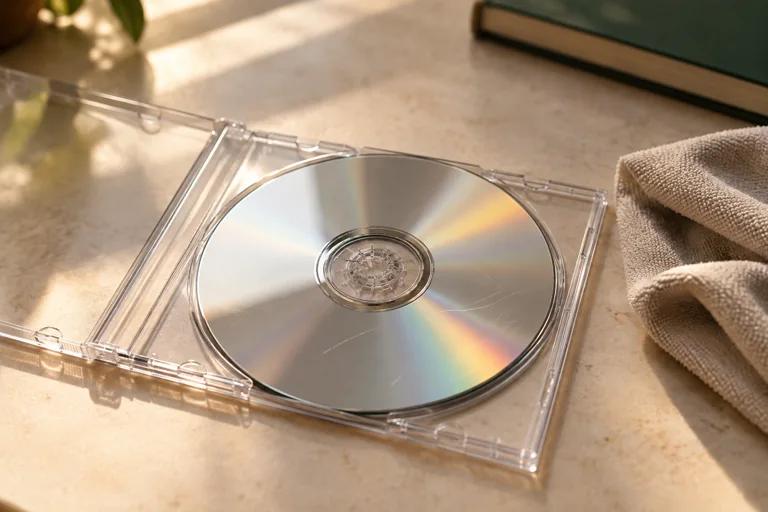
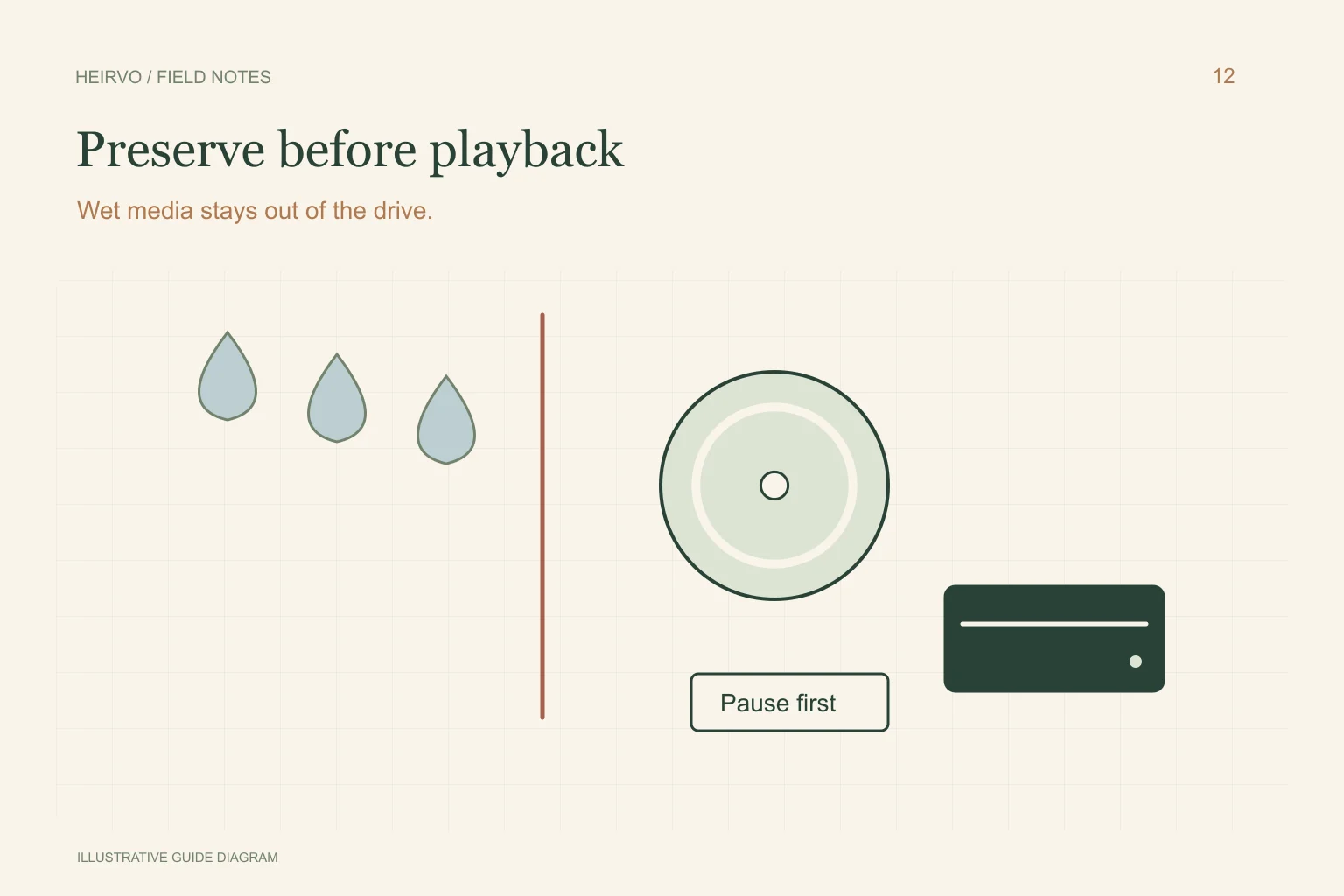
Hold the disc by its edge and centre opening where safe to do so. Photograph the label and record whether the exposure was clean water, a spill or a flood. Keep related cases and labels identified separately. Do not test a wet disc in the hope that the drive will dry it.
For contaminated materials, take advice appropriate to the contamination before handling. The Library of Congress publishes salvage guidance for collections, including media-specific cautions. A general household cleaning recipe is not a substitute for assessing an irreplaceable or contaminated disc.
Avoid heat, harsh solvents and structural repairs
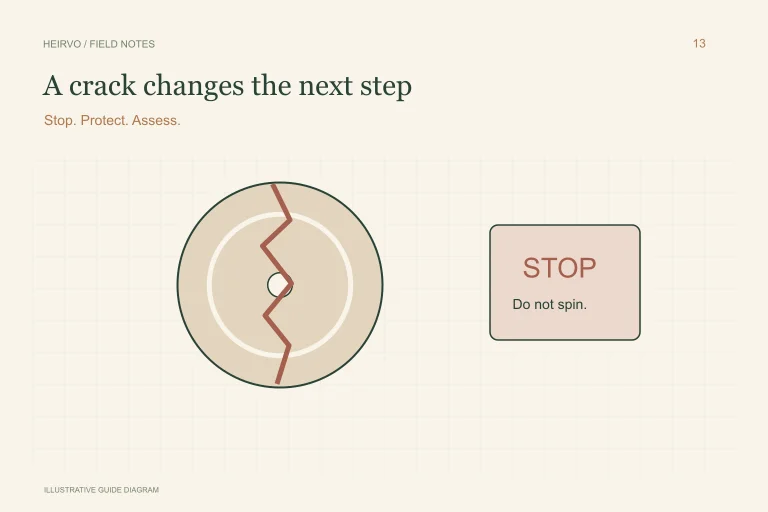
Do not use an oven, hair dryer, freezer or force to make the disc appear normal. Keep handling and cleaning decisions separate from software choices. Labels and coatings may react differently to moisture and cleaning, and a visibly separating or warped disc should not be spun.
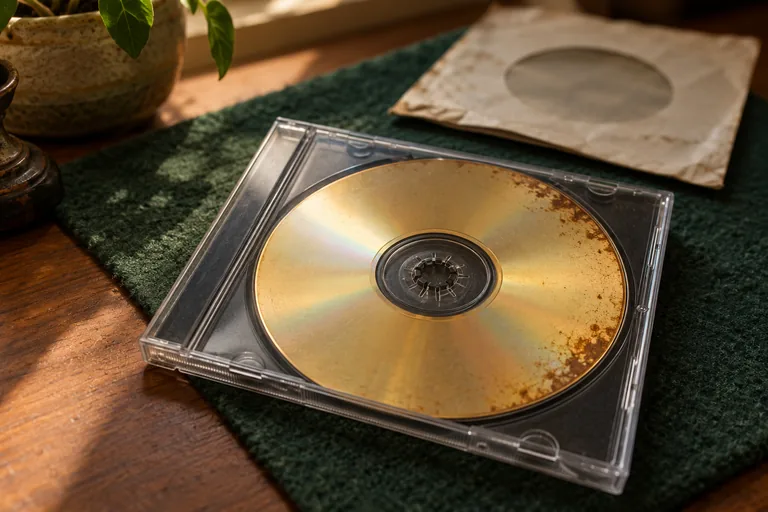
CLIR/NIST describes moisture and contaminants as potential sources of disc damage. The fact that a material has dried does not prove that the recording layer or playback surface is intact. Follow a suitable preservation procedure rather than repeatedly trying the same unsafe read.
Only then consider the readable recording
Once the medium has been assessed as dry, clean enough and structurally sound for playback, check it in a compatible drive. If ordinary copying succeeds, inspect the files and keep a separate backup. If a supported intact disc has read errors, Heirvo may help recover readable portions; it cannot remove contamination or repair layers.
Check several parts of each recording and listen to the audio. Keep any incomplete files labelled as partial. Neither a successful first frame nor a high progress percentage establishes that a water-exposed disc has yielded every wanted scene.
Keep the history with the recovered files
Preserve the original disc and write down the exposure, handling advice followed, read attempts and known gaps. A later specialist or another family member should be able to distinguish original footage from a partial saved copy without repeating your experiments.
A few more answers
Common questions
Can Heirvo dry or clean a wet DVD?
No. It is a software reading workflow. Safe physical handling must come before attempting recovery.
Is there one drying time that makes every disc safe?
No universal time is given here. Exposure, contamination, construction and physical condition differ; obtain suitable preservation advice.
Sources & further reading
Technical guidance from the original publishers. Always use the instructions for your exact device.